
A private-label data logger
An EU importer is planning a trademark.
CONFORMITY
MAINTENANCE
Starting position and test order
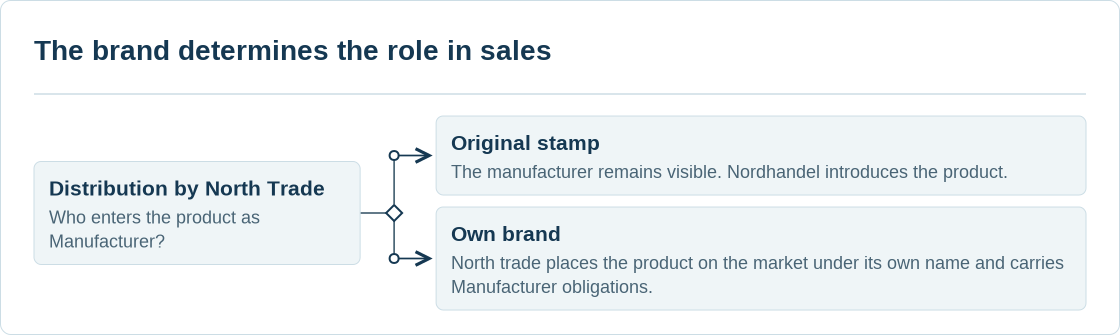
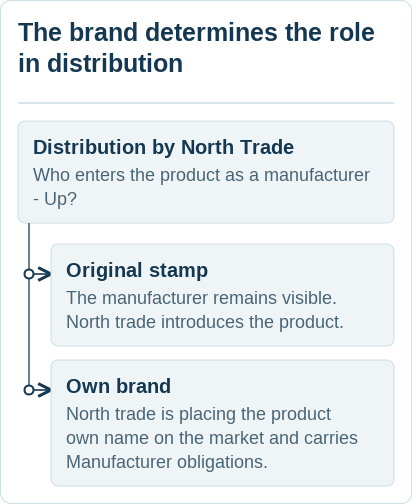
The fictitious Nordhandel GmbH introduces data loggers from a third country. In variant A the name of the manufacturer, its documents and the unchanged product status remain intact. Another dealer sells the equipment further.
In variant B, Nordhandel is the first to market the same data logger under its own brand. The existing declaration only mentions the original supplier. The contract does not yet provide the technical documentation in a comprehensible manner.
Compare test data and consequences
Variant A
- Scale
- Manufacturer brand and roles appear comprehensible
- Observation
- Original brand, import and resale occupied
- Follow
- Importers and traders independently examine
Variant B
- Scale
- Clearing the placing on the market under its own trademark
- Observation
- North trade acts as a brand
- Follow
- Check manufacturer's obligations
Complete documentation
- Scale
- Dossier accessible to the documented product stand
- Observation
- Committed to the supplier
- Follow
- Release results open
Edit the test step by step
Confirm market entry and brand per model
Document contract, responsibility and actual first entry in the supply chain.
Testable evidence Roll sheet per variant and affected organization.
Assigning the duties of each role
Compare the duties of importers and traders at A with the manufacturing obligations of Nordhandel at B.
Testable evidence Matrix with responsible and pending proof per obligation.
Disconnect Delivery and Remedy
Check clearly identified documents and ability to release security updates and notifications.
Testable evidence Decide with delivery ban or confirmed release.
Worked decision and negative test
Decision in case
Nordhandel remains in Variant A importers with their own testing and reaction obligations. In Variant B the company carries manufacturer obligations for the self-brand distribution. The unchanged hardware does not change this role assessment.
The previous supplier receipt is not enough for the self-mark approval. The team requires access to the appropriate documents and confirms its own remedy and reporting capability before market provision.
Counter-sample and impact
Do not use the trademark and instead introduce a verifiably significant change in the equipment software. Check the manufacturer role again and refer the decision to the actually changed product.
Start with a delivery model. Then prove the change by the actual presentation and market provision.
Templates and worksheets
Roles and market provision
Check the original roll, trademark or substantial change and the available supporting documents for each delivery model.
Outcome A documented role with responsibility for testing, product maintenance and reporting.
Read the instructions
Fictional example Nordhandel is an importer of the original brand. Producer responsibility is added to the first sales under its own brand.
- Identify the starting situation Designate the delivery model and original roles per unit.
- Run the test Check your own brand and make a significant change individually.
- Secure decision and evidence to assign proof, remedy and responsible persons before release.
Official sources
Cyberresilience Regulation in text
Use the article or attachment that regulates the task to be solved.
Guidelines for the application of CRA
Check inter alia the remote processing, expected use and delimitation to other legal acts.
Responsibility of manufacturers of digital products
Compare preparation, product release and care with your own manufacturer role.

What depends on your result?
Producers, importers and distributors
Transfer the same test criteria to your own product and save the different starting data.
View the guideProduct scope and remote processing
After a modified presentation or function, keep the recorded product status.
View the guide

