
Map services and dependencies
Connect the services, systems, data and necessary suppliers in a verifiable view.
IMPLEMENTATION
EVIDENCE
Start the inventory at the actual service
The risk picture needs to be assigned from the business service to processed information, responsible plants and their dependencies. For captured digital providers, the DVO annex specifies among other things the requirements for the plant inventory. The inventory must also represent changing components usable.
Choose an operational process and follow it up to the systems and providers that carry its result.
Check dependencies with a completeness test
Perform the test
Record a service ID, a responsible person, primary and replacement operation as well as the version status. From the necessary business process to application and identity to the supplier. Then adjust the reverse view and mark critical components without a documented assignment.
Result and further processing
Service-related inventory with comprehensible owner, update date and tested dependencies. An unassigned system receives a clarification order. The subsequent resumption sample refers to the same service identifier.
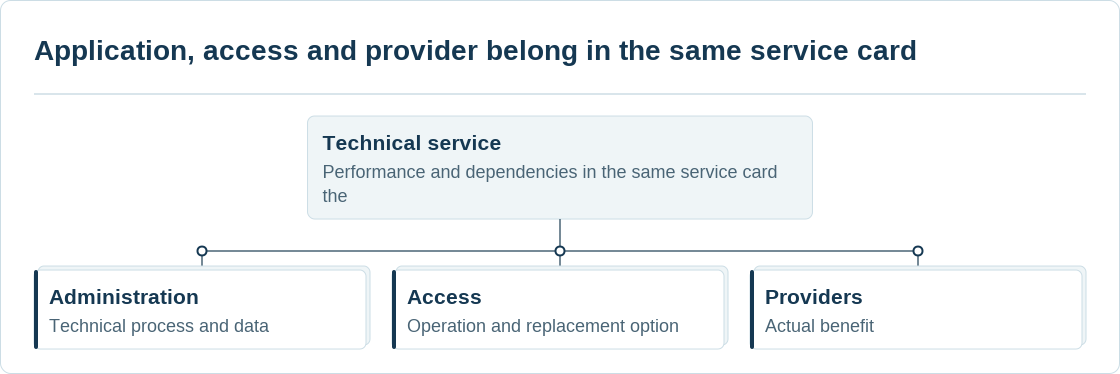
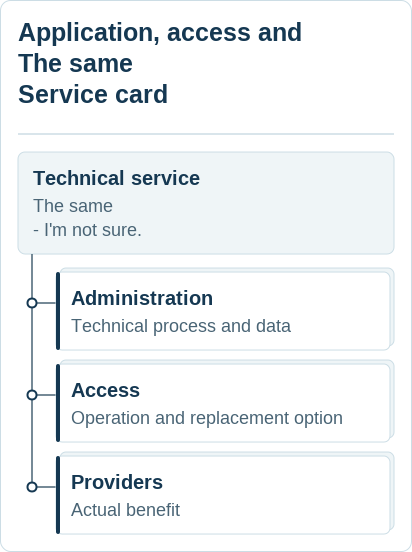
Inventory, access and supplier dependencies are assigned to the same technical service.
An example with negative test
Initial situation and observed findings
A service catalog only mentions the order portal. However, the replacement recording needs the same identity service as the primary path and the same data export. The operating sample shows which dependencies for the basic control, the subject sample and the replacement route are to be recorded separately.
Negative test
In a working copy, remove the identity service from the replacement operation branch. Check the deviation between service card and documented sample.
The own test bench
Check for each service and obligation whether the proof is available, fits the status and is currently released. Track the reliable denominator.
Detection coverage and evidence gaps
Check for each service and obligation whether the proof is available, fits the status and is currently released. Track the reliable denominator.
Outcome The following table shows the results of the assessment carried out by each test group:
Read the instructions
Fictional example N22 · Six positions are expected. Four documents are current and relevant, one has expired, one is missing.
- Determine target size Provide unique identifiers for the verified obligations and demonstrate their scope.
- Matching Evidence Confirm receipt date, validity, coverage and release separately.
- Solve gaps Arrange responsibility, appointment and professional standard for any open document.
Operating effects and restart order
Arrange operational consequences and restart targets per performance. Calculate necessary parallel and subsequent steps against the internal target
Outcome Prioritized performance with comprehensible restart chain and visible target deviations.
Read the instructions
Fictional example N18 · The target of the order service is 90 minutes. The operational dependence takes 70 minutes, the subsequent handover 35 minutes.
- Coordinating objectives Set tolerable interruption, restart target and data loss.
- Count order Confirm the parallel requirements and the duration of the subsequent professional transfer.
- Sharing time and data Compare the calculated values and open evidence for the organizational decision.
Legal basis for this task
§ 30 BSIG · Risk management measures
For each relevant service, combine risks, ten fields of action, evidence and effectively verified effect. § 30 para. 3 gives priority to the technical requirements of the DVO for the providers covered there.
Annex 2 · (EU) 2024/2690 · Risk management and verification
Link risk assessment, treatment, documented review and independent evaluation to the same extent.
Annex 12 · (EU) 2024/2690 · Asset management
Compare inventory, classification, responsible body and treatment at the end of life in actual operation.

Deriving the next order from the result
Choose the work path that fits your open decision. The descriptions show what you start with and which proof you then hold.
Prioritize risks to actual default
The dependencies are recorded. Evaluate which of these must be treated first.
Starting point Start with an actual failure image with affected performance and documented effects.
Deriving from effects, dependencies and existing evidence prioritized test orders.
Work result A well-founded order of risks with the influence factor to be assessed first.
View the guidePlan the ten action areas for own services
They must derive a specific test order from a risk.
Starting point Select a service. Capture already observed interference and its dependencies.
Put risk assessment, protective measures and effectiveness tests in a common work plan.
Work result The risk involves action, responsible persons, measurable targets and associated evidence of impact.
View the guide

