
Compare configuration to baseline
Deviating baselines with responsible decision and effective correction follow.
IMPLEMENTATION
EVIDENCE
Identify the released and active version
Define a shared setpoint and source for the actual observed configuration for the service you are viewing. Adjust environment, time and responsible exception. The comparison needs a clear reference to the service function.
Select a system with known target level. Secure the active version and time period of observation.
Discrepancies with specific correction order
Perform the test
Use a permissible export of the operating team and the registered setpoint. Check a system from primary and one from replacement operation. Secure the deviation, exceptional period and the second comparison after the change.
Result and further processing
Versioned target-actual comparison with a temporary exception and comprehensible renewal. The result determines which version or component is retested at the same target.
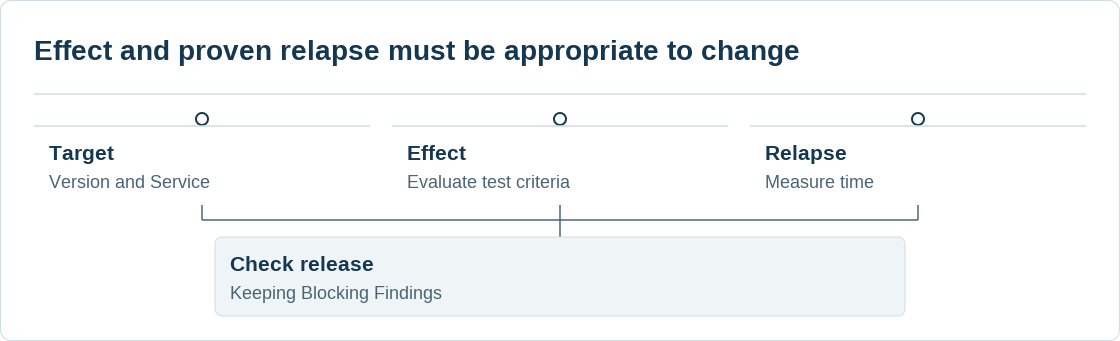
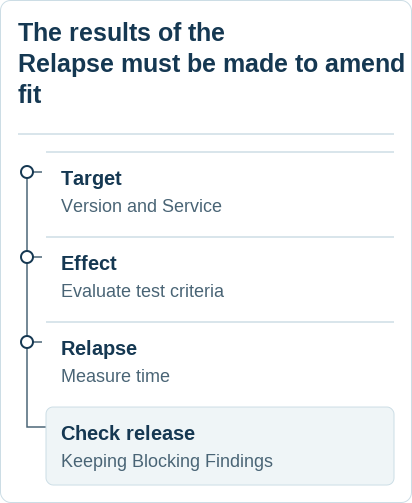
Release requires appropriate observations to change and relapse option.
An example with negative test
Initial situation and observed findings
According to the inventory, a replacement system uses the current status. Export shows a previously approved exception, which has already reached its end. The operation compares the actual version with the release and confirms the corrected state in the repeat sample.
Negative test
Compare two error-free exports that represent different environments. The release requires a unique scope per data source.
The own test bench
Evaluate planned changes before release using measurable mandatory criteria, tested relapse time and proven target level.
Change release and relapse test
Evaluate planned changes before release using measurable mandatory criteria, tested relapse time and proven target level.
Outcome Release decision with visible blocking findings, verified version and approved window of time.
Read the instructions
Fictional example N17 · The professional test succeeds. Relapse time is 18 minutes at 15 allowed. A documented follow-up test reaches twelve minutes.
- Set the release conditions Define the actual blocking criteria, target version and verification evidence.
- Observe relapse Measure the relapse up to the predetermined usable performance.
- Confirm decision Connect the checked stand to the designated release manager and time window.
Detection coverage and evidence gaps
Check for each service and obligation whether the proof is available, fits the status and is currently released. Track the reliable denominator.
Outcome The following table shows the results of the assessment carried out by each test group:
Read the instructions
Fictional example N22 · Six positions are expected. Four documents are current and relevant, one has expired, one is missing.
- Determine target size Provide unique identifiers for the verified obligations and demonstrate their scope.
- Matching Evidence Confirm receipt date, validity, coverage and release separately.
- Solve gaps Arrange responsibility, appointment and professional standard for any open document.
Legal basis for this task
§ 30 BSIG · Risk management measures
For each relevant service, combine risks, ten fields of action, evidence and effectively verified effect. § 30 para. 3 gives priority to the technical requirements of the DVO for the providers covered there.
Annex 6 · (EU) 2024/2690 · Procurement, development and maintenance
Check the safety in selecting, changing, maintaining and controlled removal of a system under the relevant rule of the Annex.
Annex 12 · (EU) 2024/2690 · Asset management
Compare inventory, classification, responsible body and treatment at the end of life in actual operation.

Deriving the next order from the result
Choose the work path that fits your open decision. The descriptions show what you start with and which proof you then hold.
Complete findings with robust follow-up
In addition to the deviation, also ensure the observed condition, the original scale and the performance affected. Perform cause, correction and follow-up testing under the same detection code. The remedy certificate confirms the changed status.
A deviation is confirmed. The corrected configuration must be tested again.
Evidence of cause, released change, comparability, counter-sample and completion for the same finding
Your decision Which run completely checks the original problem? Connect the result to the documented release.
Work through the caseCheck accesses and system changes in operation
A change, configuration or access must be checked during operation.
Starting point Select a service and a specific process to access, share or change the system.
Check rights, system states, cryptography and emergency communication on specific operations.
Work result The agreed target state and the observed operating status bear the approval or an open finding.
View the guide

