
Verify network segmentation
Set-matrix with system limit and justification.
IMPLEMENTATION
EVIDENCE
Check released connections and segment boundaries
The effectiveness of a segment border is shown by target connections and technically justified lock cases. An architectural plan specifies the target. Operating data and controlled tests show which released relationships are valid at the actual state.
Perform the verification task
Defining the verifiable relationships
Determine zones, data flow, operational responsibility and the professional reason for each released relationship. Choose a technically unauthorized, clearly controlled counter-relationship.
Work result Set-matrix with system limit and justification.
Match plan, operational documentation and test
Compare the released stand with the configuration and log documents provided by the operation. Only approved synthetic connection cases are confirmed under supervision.
Work result Test protocol for each permitted and not allowed relationship.
Keeping the scope of results
Check whether the sample also concerns evasive operation and administrative paths. Limit your statement to the tested design and plan for the follow-up test of changes.
Work result Release with scope and version.
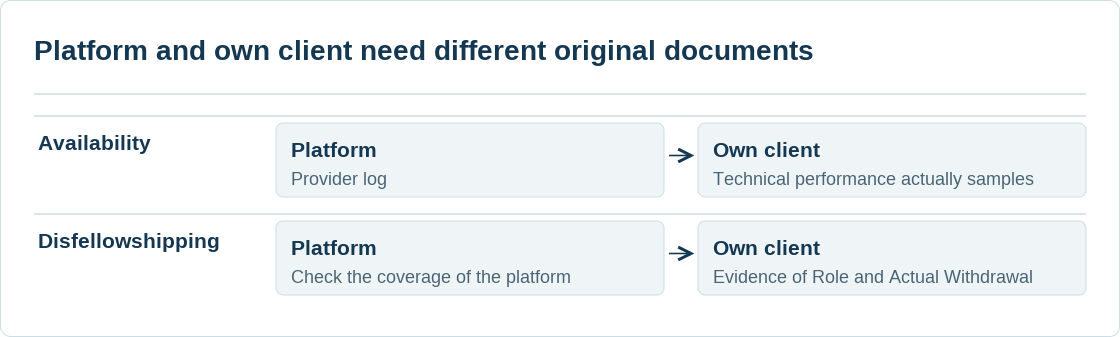
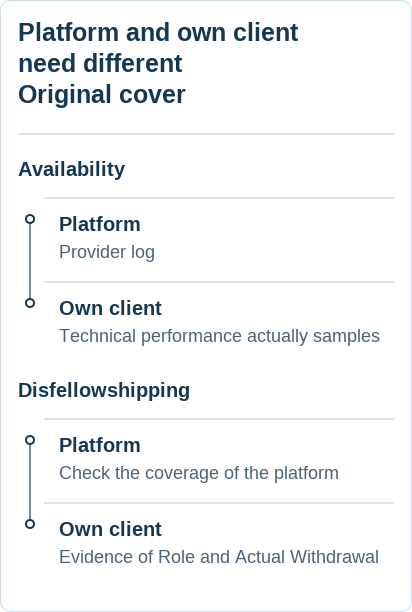
An observation proves the claimed claim for the assigned role. The example separates the platform receipt from the proof of a separate permission.
Check the decision in the example
Situation
A transport service has three expected service relationships and a fundamentally forbidden relationship to the administrative zone. Three permissible cases work. The controlled countercheck shows a different rule for replacement operation.
Evaluation and decision
The technical process is documented in normal operation. The segment limit of the replacement operation remains open as its own findings until the approved test sequence is confirmed at the corrected level.
Negative test for your own operation
Delete the counter-test to replacement operation from the test scope. Evaluate which statement about the limit is still technically viable.
Help for your decision
Set minimum sample, hit rate and time limit. Calculate the individual observation and complete test run with set-off cases and negative sample separately.
Efficacy test and run release
Set minimum sample, hit rate and time limit. Calculate the individual observation and complete test run with set-off cases and negative sample separately.
Outcome Evaluation per criterion and per run. Incomplete samples, double criteria and missing counters are visible.
Read the instructions
Fictional example N08 · All the acquisitions observed are on time. The workbook shows the missed hit rate and the own meaning of the negative sample. Change the number and supporting evidence for individual tests for the counter-test.
- Fix Test Task Enter the run and criteria identifiers, appropriate scale and planned minimum scope.
- Document valid samples Calculate the amount of hits over all valid tests and use the longest measured reaction for time.
- Check the progress overview Compare number and types of criteria with the released order. Secure deviations and post-test order.
Detection coverage and evidence gaps
Check for each service and obligation whether the proof is available, fits the status and is currently released. Track the reliable denominator.
Outcome The following table shows the results of the assessment carried out by each test group:
Read the instructions
Fictional example N22 · Six positions are expected. Four documents are current and relevant, one has expired, one is missing.
- Determine target size Provide unique identifiers for the verified obligations and demonstrate their scope.
- Matching Evidence Confirm receipt date, validity, coverage and release separately.
- Solve gaps Arrange responsibility, appointment and professional standard for any open document.
Legal basis for the verification task
Annex 6 · (EU) 2024/2690 · Procurement, development and maintenance
Check the safety in selecting, changing, maintaining and controlled removal of a system under the relevant rule of the Annex.
§ 30 BSIG · Risk management measures
For each relevant service, combine risks, ten fields of action, evidence and effectively verified effect. § 30 para. 3 gives priority to the technical requirements of the DVO for the providers covered there.
Annex 7 · (EU) 2024/2690 · Evaluate the effectiveness of measures
Link individual test criteria to the observed result and the verified handling of a deviation.

Next step for your editing level
Choose the work path that fits your open decision. The descriptions show what you start with and which proof you then hold.
Complete findings with robust follow-up
In addition to the deviation, also ensure the observed condition, the original scale and the performance affected. Perform cause, correction and follow-up testing under the same detection code. The remedy certificate confirms the changed status.
A deviation is certain. You must test the same relationship in the confirmed subsequent version.
Evidence of cause, released change, comparability, counter-sample and completion for the same finding
Your decision Which run completely checks the original problem? Connect the result to the documented release.
Work through the caseCheck accesses and system changes in operation
They work in parallel on tasks from the same department.
Starting point Select a service and a specific process to access, share or change the system.
The overview will classify further audit orders and aids.
Work result The agreed target state and the observed operating status bear the approval or an open finding.
View the guide

