
Prepare progress and final reports
Connect status, affected dispatch and processing end with evidence per reporting stage.
IMPLEMENTATION
EVIDENCE
Check the date on the basis of the actual incident report
Determine the relevant time reference from the actual transmission. In the national procedures considered, notification No. 2 is the starting point of the monthly period. Check the processing status and, if necessary, the further deadline after completion of the processing. DORA applies its own reference there.
Take the message no. 2. Check the status of the calculated monthly reference and keep the open processing separately.
Progress or completion with the established status
Perform the test
Lead to each level of content, time of dispatch, recipient and receipt. Check on the relevant date whether the incident persists and which information is already confirmed. Document remedy, still existing effects and the confirmed cause according to the actual state of knowledge.
Result and further processing
Complete and reconstructable reporting status from the first dispatch to the documented final report. An ongoing case receives the progress report at the relevant date. The conclusion is submitted after completion of processing.
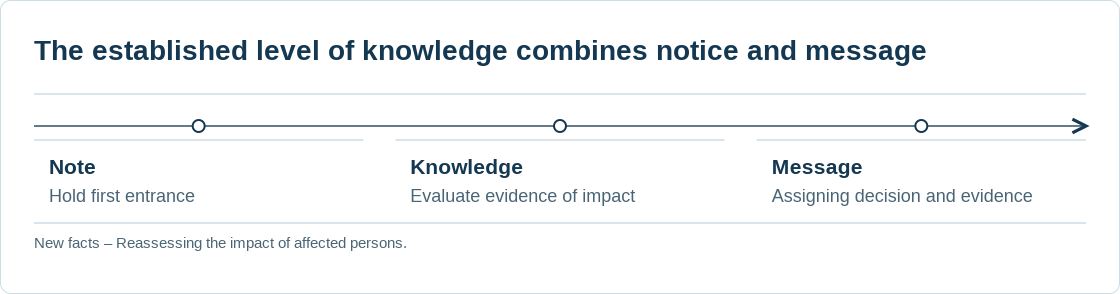
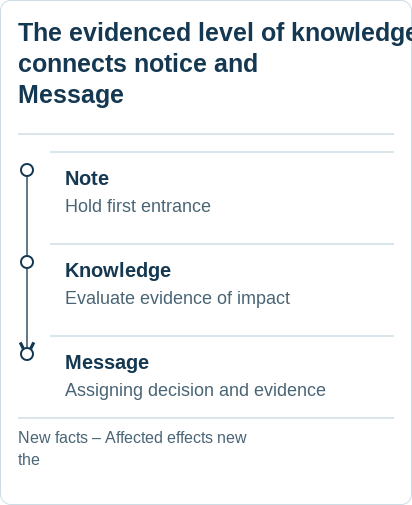
The first notice is accompanied by documented effects on the decision and comprehensible transmission.
An example with negative test
Initial situation and observed findings
The report No. 2 expired on November 18. Processing continues on the monthly reference. The team documents a progress report and checks the subsequent completion from the documented end of the processing on January 10. An earlier confirmation of receipt is carried out as own process
Negative test
Change only the dispatch of the early first message. The national monthly reference continues to follow the no. 2 message. Then check the influence of a postponed processing end.
The own test bench
Support knowledge, reporting levels and recipients. Calculate the 24-hour and 72-hour limits as well as the monthly receipt.
Decision of incident and reporting deadlines
Support knowledge, reporting levels and recipients. Calculate the 24-hour and 72-hour limits as well as the monthly receipt.
Outcome Chronology with separate right triggers, maximum limits, shipping and reception.
Read the instructions
Fictional example A significant incident is reported around 09:30 UTC. The incident report is sent 50 hours later. The conclusion follows calendarly from the actual message. In case of an ongoing incident, the progress must be made first.
- Evidence Identify the relevant time, service concerned, competent body and facts.
- Select stages and exceptions Document regular hours profile, trust service review and individual process separately.
- Check calendar limit and shipping Technically confirm the monthly limit and special cases. Organise immediate transmission and secure all receipts.
Registration deadlines for DORA, NIS2 and specialist law
Calculate the basic periods of time for the same event from the respective knowledge, classification and transmission times. Run DORA and national paths in separate sheets.
Outcome Time and receipt chains per legal entity and reporting obligation. Each reporting stage has its own time reference.
Read the instructions
Fictional example N11 · The dispatch of the DORA initial report sets the 72-hour reference for the intermediate report. In the TK and MSP thread, knowledge of the significant incident determines the 72 hours. N12 adds EnWG and critical water system.
- Confirm Concern and Classification Link the same event identifier to service, jurisdiction, knowledge and each path of confirmed classification.
- Check shipping times and steps Capture actual shipping times. Use the last relevant intermediate message or the national No. 2 message matching the path.
- Confirm calendar and transmission Check work calendar, exception and progress reference if necessary. Link the decision to the relevant reporting channel.
Legal basis for this task
First check for this task
§ 32 BSIG · Reporting of significant incidents
The early first report and the incident report are linked to the knowledge of the significant incident. The monthly reference follows the actual reported incident report. In case of a continuous incident, the reporting level changes.
Art. 23 NIS2 · Reporting of significant security incidents
Determine the time of knowledge of the relevance and the responsible reporting route. Evaluate special periods and the applicable technical criteria per provider separately.
§ 168 TKG · Report significant security incidents in telecommunications
Determine relevance by means of paragraph 3. Use the published technical procedure for the Federal Network Agency and BSI. The monthly period follows on from the notification according to paragraph 1, sentence 1, point 2.

Other official references1
- § 5d EnWG · Documentation, registration and incident reporting (opens in new tab)
Sektorales Recht · Energie, Telekommunikation, Gesundheit und Wasser
Distinguishingly the documentation of the catalogue for the Federal Network Agency, registration with the BSI and the reporting stages to the reporting point according to § 32 BSIG. For existing energy supply network operators outside the BSIG categories, paragraph 4 states 6 March 2026 as a statutory event date.
Deriving the next order from the result
Choose the work path that fits your open decision. The descriptions show what you start with and which proof you then hold.
Complete findings with robust follow-up
In addition to the deviation, also ensure the observed condition, the original scale and the performance affected. Perform cause, correction and follow-up testing under the same detection code. The remedy certificate confirms the changed status.
The report is processed and the effectiveness of the remedy must be demonstrated.
Evidence of cause, released change, comparability, counter-sample and completion for the same finding
Your decision Which run completely checks the original problem? Connect the result to the documented release.
Work through the caseReport security incident
An event is taking place and you need to clarify the relevance and deadlines.
Track knowledge, early initial reporting, incident reporting and closure on the basis of the same event.
View the guide

