
Assess critical installations
Check the installation limit, transition level, reporting route and established detection date.
IMPLEMENTATION
EVIDENCE
Determine the load capacity and time of detection
Start with actual operation and the rule applicable for the reference date to plant categories and thresholds. Determine when the specific new versions are to be applied from the legal transition. Keep track of installation, critical service, input data and measurement period.
Include the systems that are relevant for the operation of the plant. The concrete determination by BSI is decisive for the date of detection. For old operators, reclassified operators or an explicit exception, the decision-making process must be documented separately.
So you go ahead
Holding investment, threshold reference and legal status
Compare the actual plant category, measurement size and annual data with the relevant legal regulation. Mark which change would affect classification.
Work result Reasoned decision with reference date and data.
Operationalise additional requirements
Determine relevant systems, supply, evasive options and attack detection. Under safe conditions, test the transfer of an approved test signal to the competent authority.
Work result Plant limit with documented detection and further processing.
Detection and remedying
Connect the BSI determination, the procedure description to be applied, the conduct of the examination and the correction of safety deficiencies.
Work result Installation-specific test order with commissioned body and follow-up dates.
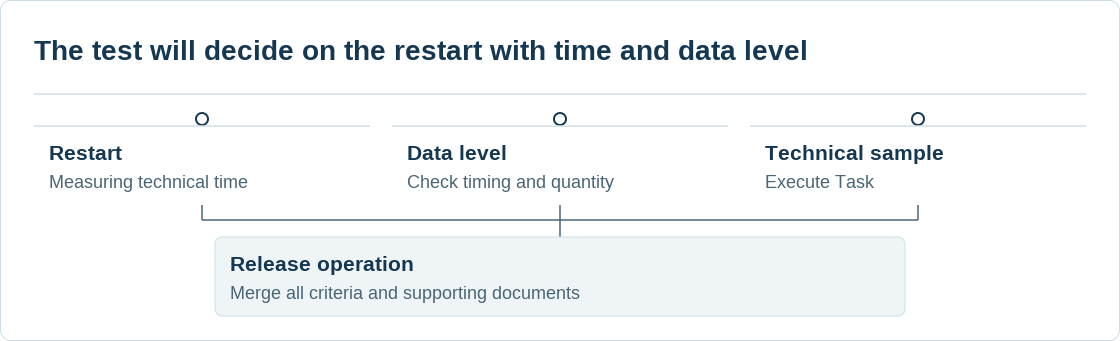
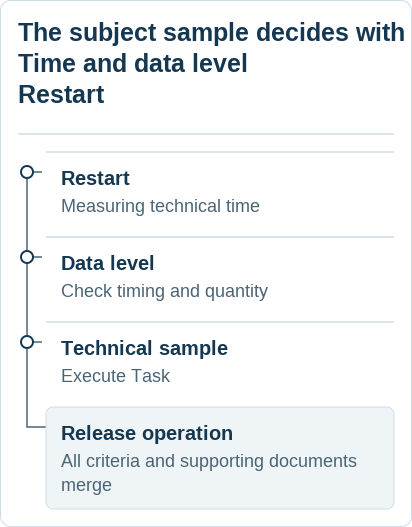
Technical resumption requires the examination of time, data level and executed business process.
Test example and counter-probe
Situation
An established plant operator has a previous test bench. Another entity for the first time exceeds a threshold relevant to its actual type of plant. For both, the system type, legal status and date of detection are documented separately. In the second case, the earlier proof of the first facility cannot serve as a reference date.
Negative test
In addition, check the relevant reporting route and the installation-related information in case of a significant incident according to current BSI information.
Work aids for your operation
Use the predictable template and check the result with the fully described example.
Plant limit and detection planning
Gather asset assignment, scope, set date of detection and tracking of defects.
Outcome The test task with documented time frame was documented with sources.
Read the instructions
Fictional example A new operator knows his date of classification, but not yet a BSI date. The process remains open on time. An old operator carries out the concretely confirmed date with the old proof reference.
- Lines of installation and threshold The following are the main points of reference for the European Parliament:
- Documenting evidence Record the initial case, BSI date and referenced confirmation.
- Review and follow up on shortcomings Document the state of the art, evidence and re-examination.
Registration and deadlines for amendments
Plan initial registration and changes including jurisdiction, time of knowledge, evidence and the correct version.
Outcome Process plan with calculated calendar reference and documented shipping status.
Read the instructions
Fictional example The special registration begins separately with an MSP. A later change of the establishment leads to a separate deadline check from the event day.
- Identifying registration The start date, § 33 or § 34 and the proof of jurisdiction.
- Change and legal status Keep the event, knowledge and current rule separate. Document the version used when it is moved.
- Verify date and dispatch Special calendar or transition case check and file the portal receipt.
Official references for this task
First check for this task
§ 31 BSIG · Additional requirements for critical installations
Limit the systems that are relevant to the functioning of the affected installation. Check additional risk-appropriate precautions and the effectiveness of attack detection.
§ 39 BSIG · Proof of critical installations
Determine the concrete BSI determination, classification as a new or existing operator and an appropriate exception. Plan scope of examination, handover and remedy open defects.
§ 66 BSIG · Transitional arrangements for CRITIS and registration
§ 66 links the application of certain recasts to the entry into force of the regulation referred to therein. Please provide evidence for the decision date, which version is therefore actually applicable.

Other official references5
- Appendices and thresholds (opens in new tab)
BSI-KritisV · Gesetze im Internet
Check the legal regulation applicable to the reporting date, the concrete installation, relevant unit and reference data.
- § 32 BSIG · Reporting of significant incidents (opens in new tab)
Deutsche Anwendung · BSIG
The early first report and the incident report are linked to the knowledge of the significant incident. The monthly reference follows the actual reported incident report. In case of a continuous incident, the reporting level changes.
- § 41 BSIG · Refusal of critical components (opens in new tab)
Deutsche Anwendung · BSIG
In the case of specific procurement, check whether a component is recorded and whether a relevant administrative order exists. Support the affected plant scope.
- Physical resilience of critical installations (opens in new tab)
KRITIS-Dachgesetz · Gesetze im Internet
Choose from the transitional arrangements which rule is already applicable for identification, registration or physical resilience.
- Register and choose the correct reporting path (opens in new tab)
BSI · Informationen für NIS-2 und MIP
The notice distinguishes NIS2 registration in the BSI portal, notifications and transitional use of MIP by certain groups.
Checking the plant limit in the health care sector
The hospital case combines approved facility, number of cases, proof planning and professional resumption.
Health and CRITIS
Limit hospital and critical equipment by means of resilient case numbers. Arrange protection obligations and evidence of the actual care provided.
Secure the scope and time of detection
Technical and operational boundaries between common critical installations
List of installations with documented association decision.
Each sub-assembly has a unique assignment. Aggregated measured values are complete and without duplicates. The limit of the tested plant network is comprehensible for operation and testers.
Work through the caseSecure official detection time for critical installations
Confirmed starting point with documented case variant.
The plan shall include the assignment per installation, the identified legal case, the confirmed date and the early steps for supporting documents, verification and submission.
Work through the case
Match registration and verification
Registration
The concern is certain and data or dates must be checked.
Merge the right entity, register and confirmed notification.
Work result The competent body, released output and registration confirmation are linked to each institution.
Evidence and supervision
They shall provide evidence of the audit mandate for management, internal audit or oversight.
Merge test order, efficacy test, deviation and follow-up test.
Work result A second person can understand the findings and clearance decisions from the sources.
State of change
A change in the legal situation is to be included in the audit order.
Trace the amendment, the date it applies and the affected workflow as of the same cut-off date.
Work result The amendment note shows when and how it was reviewed.

