
Log retention and access
Shared storage and access catalogue.
IMPLEMENTATION
EVIDENCE
Sample storage and evaluation of protocols
The specific test counts which events are needed for detection and traceability and which time limit per source is legally and technically justified. A protected inventory is required, which can be provided in full and within the time limits when an admissible query is made available.
Perform the verification task
Set sources, purposes and deadlines
Capture event type, purpose of investigation, access and relevant specifications. Match the period and deletion rule with the competent specialist offices.
Work result Shared storage and access catalogue.
Sample the time limit
Make samples for each relevant source within and outside the permitted time window. Measure whether the older admissible evidence is available in good time and if the expired evidence is properly treated.
Work result Observation protocol with date, source and verified role.
Consider external performance and follow-up
Adjust contractual and actual availability with the service provider. After changes, check acceptance, deletion rule and technical usability again.
Work result Deviation and detection levels per source.
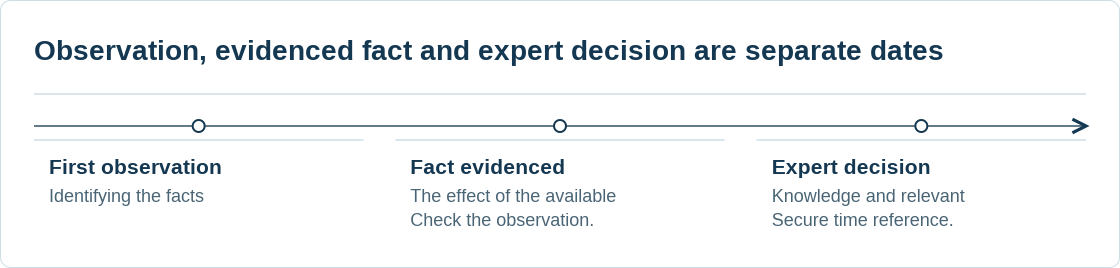
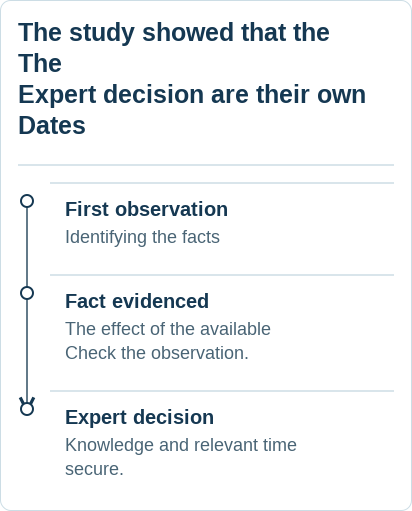
The scheme distinguishes the first observation, the established state of play and the technical decision. The legally relevant time base is shown by the applicable procedure and the facts available at this time.
Check the decision in the example
Situation
The time limit approved in the case of exercise is 90 days. A document of day 87 is available in the service provider archive, but can only be provided after three days. The own investigation exercise needs it within four hours.
Evaluation and decision
The case proves the storage, but fails to meet the operational provision criteria. The subsequent test measures accessibility in the intended period including the service provider.
Negative test for your own operation
Make the receipt available on time and check separately whether access and deletion work as shared.
Help for your decision
Arrange the ten fields of action. Treat test criteria, measurement, detection, findings and retest in the same work position.
Measures and efficacy samples
Arrange the ten fields of action. Treat test criteria, measurement, detection, findings and retest in the same work position.
Outcome Summary of measures with observed effect and pending retests.
Read the instructions
Fictional example A back-up is achieved in 88 minutes. The sample from the department is missing. The measure remains open until the agreed result is fully documented.
- Select criterion and type of test The ten action fields bear prepared examples. Set the appropriate yes-no criterion or a measurable setpoint.
- Record impact and evidence Refer to the target and is on the same performance and the relevant time.
- Track deviation and follow-up Record correction order, re-result and receipt with the same verification identifier.
Detection coverage and evidence gaps
Check for each service and obligation whether the proof is available, fits the status and is currently released. Track the reliable denominator.
Outcome The following table shows the results of the assessment carried out by each test group:
Read the instructions
Fictional example N22 · Six positions are expected. Four documents are current and relevant, one has expired, one is missing.
- Determine target size Provide unique identifiers for the verified obligations and demonstrate their scope.
- Matching Evidence Confirm receipt date, validity, coverage and release separately.
- Solve gaps Arrange responsibility, appointment and professional standard for any open document.
Legal basis for the verification task
Annex 3 · (EU) 2024/2690 · Handling of security incidents
Check receipt, evaluation, reaction, documentation and follow-up as a coherent process with clear handovers.
§ 30 BSIG · Risk management measures
For each relevant service, combine risks, ten fields of action, evidence and effectively verified effect. § 30 para. 3 gives priority to the technical requirements of the DVO for the providers covered there.
Annex 7 · (EU) 2024/2690 · Evaluate the effectiveness of measures
Link individual test criteria to the observed result and the verified handling of a deviation.

Next step for your editing level
Choose the work path that fits your open decision. The descriptions show what you start with and which proof you then hold.
Check direct suppliers at the required performance
Before selecting the service, describe the required operational service and its consequences. Check security practices, dependencies and ability to demonstrate observable protection requirements in the relevant scope.
The provision depends on the provider. You need a contractually and operationally proven performance.
Connect security requirements, evidence and selection decision for a direct supplier.
Your decision A reasoned selection with confirmed evidence and verifiable conditions for open points.
Work through the caseCheck accesses and system changes in operation
They work in parallel on tasks from the same department.
Starting point Select a service and a specific process to access, share or change the system.
The overview will classify further audit orders and aids.
Work result The agreed target state and the observed operating status bear the approval or an open finding.
View the guide

